Maintaining a healthy vegetable garden in India can be immensely rewarding, but it also comes with its fair share of challenges. Whether you are growing leafy greens, quick-yielding vines like bitter gourd (karela), or tomatoes on your terrace, plant diseases can strike unexpectedly if weather conditions and moisture levels are mismanaged.
Recognizing symptoms early and applying timely, targeted solutions can save your harvest from total devastation. Here is a comprehensive guide to the most common vegetable plant diseases and how to manage them effectively.
1. Powdery Mildew
- Crops Affected: Cucurbits (bitter gourd, bottle gourd, cucumbers), pumpkins, squash, and peas.
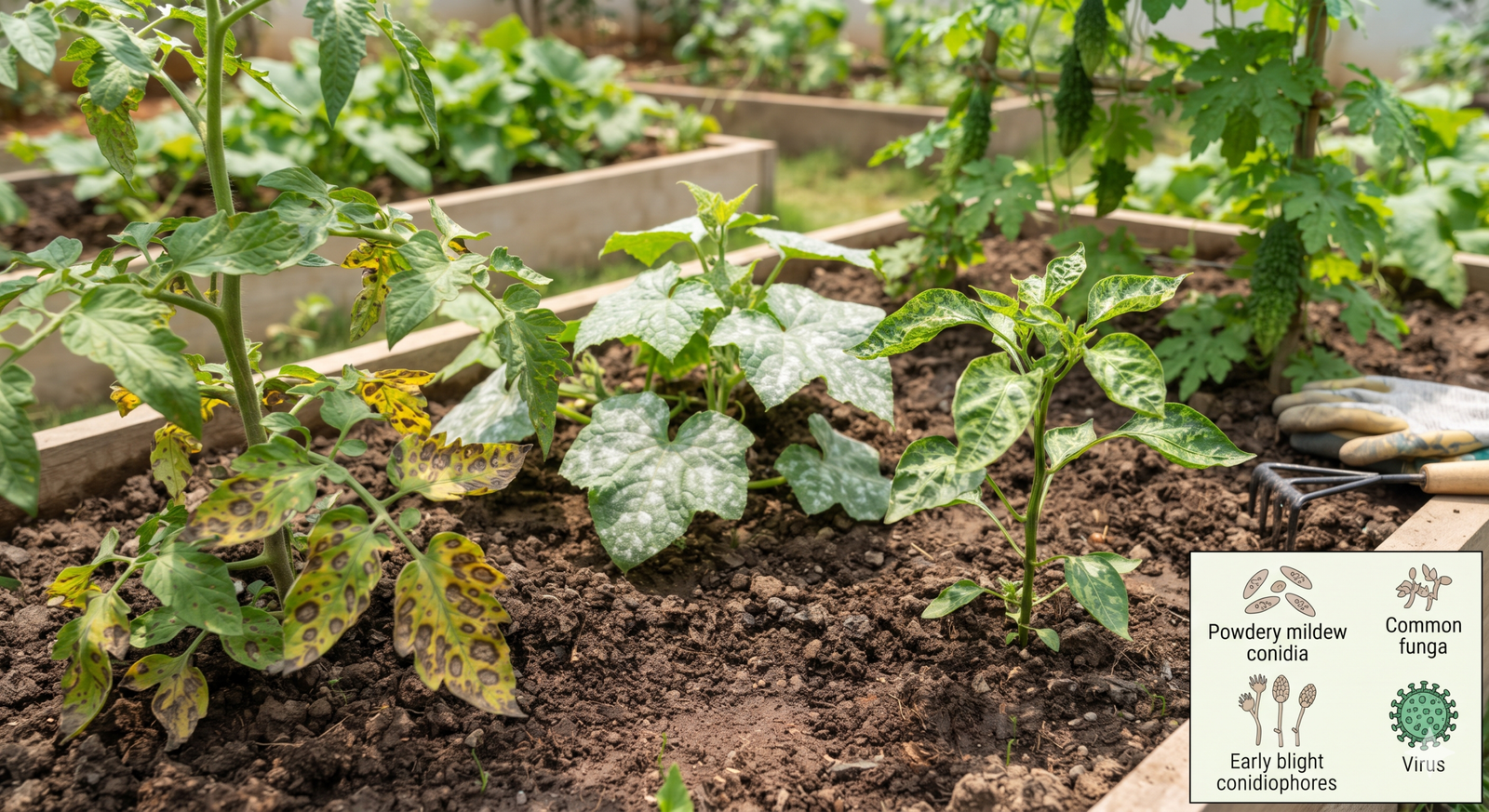
- Symptoms: A distinctive white or grey powdery growth appears on the upper and lower surfaces of leaves, stems, and sometimes buds. Infected leaves eventually turn yellow, dry up, and drop prematurely.
- Causes: High humidity paired with moderate temperatures, crowded planting that restricts airflow, and shade.
- Solutions:
- Spacing & Pruning: Space your plants adequately and prune dense foliage to improve air circulation and sunlight penetration.
- Organic Sprays: Spray plants with a solution of neem oil (1000 ppm) or a homemade mixture of baking soda (1 tablespoon mixed with a few drops of liquid soap in 1 liter of water).
- Preventative Care: Water the soil at the base of the plant rather than wetting the leaves overhead.
2. Damping-Off Disease
- Crops Affected: Young seedlings (tomatoes, chillies, eggplants, and leafy greens) in nursery trays or pots.
- Symptoms: Seedlings suddenly collapse at the soil line, wither, and die. The stem often looks water-soaked, thin, and constricted near the base.
- Causes: Soil-borne fungi (Pythium, Rhizoctonia) thriving in overly wet, cold, and poorly drained potting soil.
- Solutions:
- Sterilized Mix: Always use clean, well-draining potting mixes containing cocopeat, compost, and garden soil. Avoid over-watering young sprouts.
- Seed Treatment: Treat seeds with organic bio-fungicides like Trichoderma viride before sowing to suppress soil pathogens.
- Sunlight: Ensure your seedling trays receive adequate morning sunlight and ventilation.
3. Bacterial Wilt
- Crops Affected: Solanaceous crops (tomatoes, potatoes, chillies, and brinjals).
- Symptoms: Plants suddenly wilt and droop during the warmest part of the day, often without turning yellow first. If you cut the stem and place it in clear water, a milky white stream of bacterial ooze will bleed out.
- Causes: Soil-borne bacteria (Ralstonia solanacearum) entering through root wounds or damp, warm soil.
- Solutions:
- Crop Rotation: Do not plant tomatoes or chillies in the same spot where solanaceous crops grew previously.
- Removal: Immediately pull out and destroy infected plants to prevent the bacteria from spreading through soil or water runoff.
- Resistant Varieties: Opt for certified disease-resistant hybrid seeds when available.
4. Leaf Blight (Early and Late Blight)
- Crops Affected: Tomatoes, potatoes, and various vegetable crops.
- Symptoms:
- Early Blight: Small brown-to-black spots with concentric rings (target-board pattern) appear on older, lower leaves, eventually causing leaf yellowing and drop.
- Late Blight: Water-soaked dark patches appear on leaves and stems during damp, rainy weather, quickly turning brown and rotting the fruit.
- Causes: Prolonged leaf wetness, high humidity, and splashing rain carrying fungal spores.
- Solutions:
- Mulching: Apply a layer of organic mulch or straw around the base of plants to prevent soil splashing onto lower leaves during watering or rain.
- Fungicidal Control: Apply copper-based organic fungicides or neem extract at the first sign of spotting.
- Sanitation: Clear away all plant debris at the end of the season to prevent fungal spores from overwintering.
5. Mosaic Virus (Tomato Mosaic / Cucumber Mosaic)
- Crops Affected: Tomatoes, cucumbers, beans, peppers, and gourds.
- Symptoms: Leaves display a mottled pattern of light and dark green patches, often accompanied by curling, distortion, and stunted plant growth. Fruits may develop irregular bumps or discoloration.
- Causes: Transmitted primarily by sap-sucking vectors like aphids, whiteflies, and thrips, or transferred via contaminated garden tools and human hands (tobacco use can also transmit mosaic viruses).
- Solutions:
- Vector Control: Manage sap-sucking insects early using yellow sticky traps and regular sprays of neem oil.
- Tool Hygiene: Disinfect pruning shears and garden tools regularly with rubbing alcohol.
- Rogue Infected Plants: There is no cure for viral infections. Pull up and discard infected plants immediately to protect neighboring healthy crops.
Pro-Tips for Disease Prevention in Your Garden
- Sanitation is Key: Always clear out dead foliage, fallen fruit, and weeds where fungi and pests hide.
- Water Wisely: Water early in the morning so any moisture on the leaves evaporates quickly under the sun.
- Encourage Beneficials: Build healthy, living soil rich in organic compost and vermicompost, which naturally supports beneficial microbes that outcompete harmful soil pathogens.