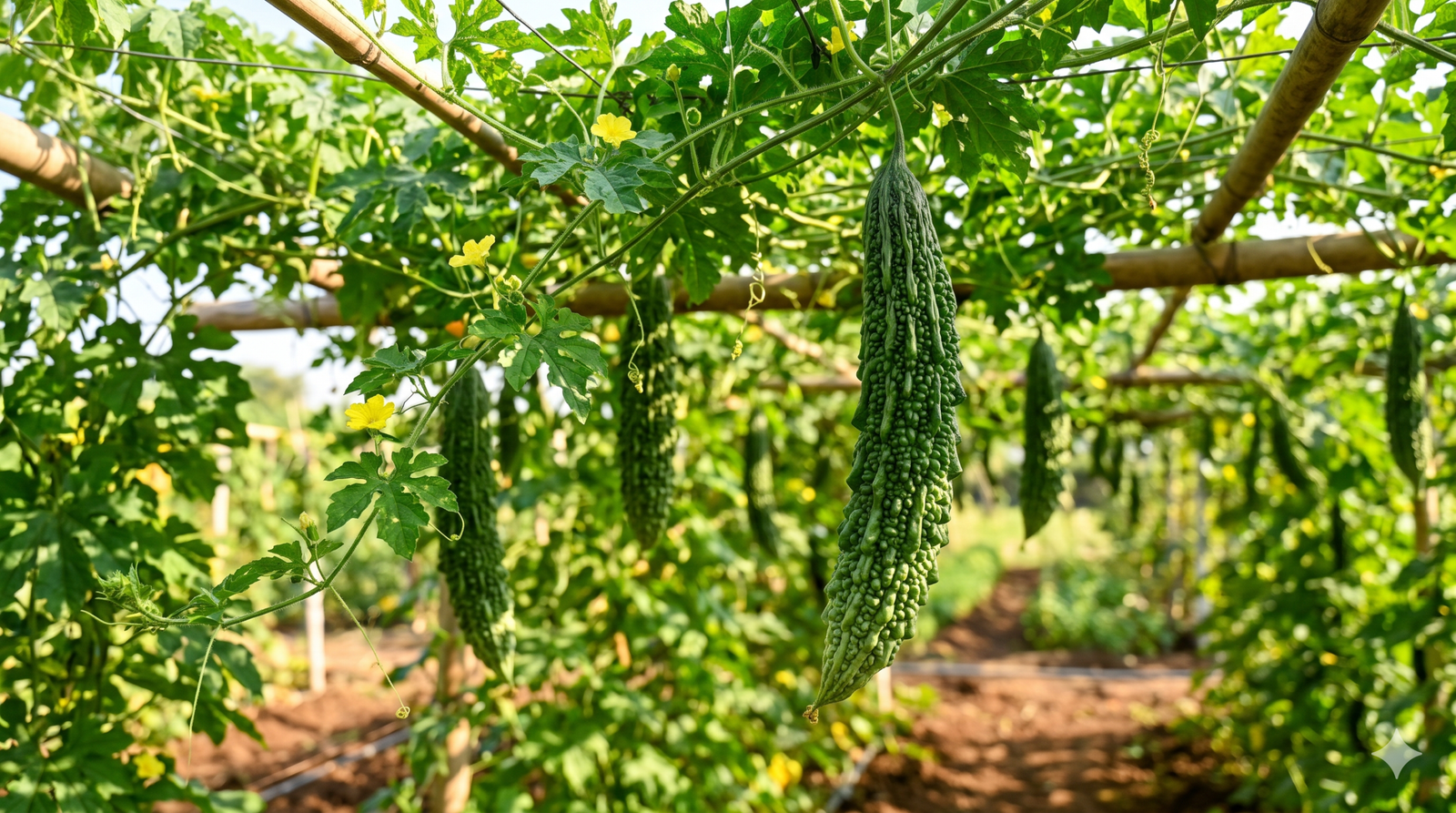
Looking to master karela farming in India or grow fresh bitter gourd in your home garden? Bitter gourd—widely known as Karela, Pavakkai, or Bitter Melon—is one of the most resilient and profitable vine crops you can cultivate. Packed with iron, vitamins A and C, and powerful antioxidants, it is heavily demanded across Indian vegetable markets year-round.
Whether you are a commercial grower planning acreage or a terrace gardener looking for a high-yielding backyard crop, this complete bitter gourd cultivation guide covers everything from seed selection to harvest.Looking to master karela farming in India or grow fresh bitter gourd in your home garden? Bitter gourd—widely known as Karela, Pavakkai, or Bitter Melon—is one of the most resilient and profitable vine crops you can cultivate. Packed with iron, vitamins A and C, and powerful antioxidants, it is heavily demanded across Indian vegetable markets year-round.
Whether you are a commercial grower planning acreage or a terrace gardener looking for a high-yielding backyard crop, this complete bitter gourd cultivation guide covers everything from seed selection to harvest.Looking to master karela farming in India or grow fresh bitter gourd in your home garden? Bitter gourd—widely known as Karela, Pavakkai, or Bitter Melon—is one of the most resilient and profitable vine crops you can cultivate. Packed with iron, vitamins A and C, and powerful antioxidants, it is heavily demanded across Indian vegetable markets year-round.
Whether you are a commercial grower planning acreage or a terrace gardener looking for a high-yielding backyard crop, this complete bitter gourd cultivation guide covers everything from seed selection to harvest.
1. Best Climate and Sowing Seasons in India
To successfully grow bitter gourd from seed, understanding local weather patterns is essential. Karela is a warm-season tropical crop that thrives in temperatures between 24°C and 35°C with plenty of direct sunlight (6–8 hours daily).
- North and Central India: Grown in two primary seasons—Summer crop (sown in January–February) and Monsoon/Kharif crop (sown in June–July).
- South and Western India: Can be cultivated almost year-round, avoiding heavy waterlogged monsoon peaks.
2. Choosing the Best Bitter Gourd Seeds in India
Selecting high-germination, disease-resistant seeds is the foundation of a profitable harvest. Popular Indian varieties include:
- Pusa Do Mausami: Excellent adaptability for both summer and rainy seasons; produces dark green, ribbed fruits.
- Coimbatore Long: High-yielding variety producing long, light-green gourds favored in southern markets.
- Arka Harit: Known for smooth, spindle-shaped fruits with exceptional shelf life.
- F1 Hybrid Seeds: Highly recommended for commercial farming due to superior disease resistance and uniform fruit size.
3. How to Plant Bitter Gourd: Seed Germination & Sowing
Bitter gourd seeds have a hard outer seed coat. Proper pre-sowing treatment ensures fast, uniform sprouting.
Step A: Seed Preparation
- Soaking: Soak seeds in clean water for 12 to 24 hours to soften the seed coat and trigger germination.
- Seed Treatment: Treat seeds with an organic bio-fungicide like Trichoderma viride to protect young seedlings from soil rots.
Step B: Sowing Methods
Cucurbits dislike root disturbance, so direct field sowing is the standard practice.
- Depth & Placement: Sow seeds 2 to 3 cm deep in the soil, placing 2 seeds per pit to guarantee strong establishment.
- Spacing Guidelines: Maintain a row-to-row distance of 1.5 to 2 meters and plant-to-plant spacing of 50 to 60 cm.
4. Soil Preparation and Manuring
Karela grows best in well-drained sandy loam to clay loam soils with a pH level between 6.0 and 6.7.
- For Farmland: Plow the soil to a fine tilth. Mix in 4–5 kg of well-rotted Farmyard Manure (FYM) or vermicompost per square meter, along with neem cake to ward off soil pests.
- For Pots and Grow Bags: Use an organic potting mix comprising 40% garden soil, 30% well-rotted compost, and 30% cocopeat for optimal aeration and moisture retention.
5. Trellising and Support Systems
As a vigorous climber, bitter gourd requires vertical support to keep fruits clean, straight, and safe from soil fungal infections.
- Bower (Pandal) System: Install bamboo or wooden poles connected with GI wire or nylon netting 6–7 feet high. This allows vines to spread horizontally overhead, maximizing sunlight exposure and airflow for a massive yield boost.
6. Water and Nutrient Management
- Irrigation: Keep the soil consistently moist during germination and flowering. Use drip irrigation for commercial setups to keep foliage dry and minimize disease risks.
- Fertilization: Feed vines with nitrogen-rich organic fertilizers (such as mustard cake slurry or vermicompost) during the vegetative stage. Shift to phosphorus and potassium-rich inputs once flowering begins to prevent blossom drop.
7. Managing Common Pests and Diseases
- Fruit Fly: The most destructive pest whose larvae bore into developing gourds. Use pheromone traps and spray neem oil (1000 ppm) preventatively every 10–14 days.
- Powdery Mildew: Prevent white fungal patches by ensuring proper plant spacing, good airflow, and avoiding over-watering.
8. Harvesting Karela
- Timeline: Fruits are ready for harvest 55 to 60 days after sowing.
- Best Practice: Pick gourds when they reach full size but remain tender, glossy, and bright green. Avoid letting them turn yellow or orange on the vine, as overripe fruits become bitter and fibrous. Use pruning shears to snip stems cleanly rather than pulling the vine.